












 Compliance-first delivery
Treat your platform as a product
As engineering organisations grow, every team ends up building its own pipelines, Terraform and monitoring — slightly differently. Onboarding slows down, security reviews multiply, and a platform team drowns in tickets for “one more database”. The cognitive load lands on product engineers who just want to ship.
We build internal developer platforms the way you would build a product: interview the developers who will use it, identify the highest-friction journeys, and pave those first. Typical building blocks are service templates (golden paths) that create a repo, pipeline and environment in one step; reusable infrastructure modules from our DevOps and IaC practice; policy-as-code guardrails; and a Backstage-style portal that shows every service, owner, doc and dashboard in one place. Observability is wired in by default using our SRE and observability patterns.
The result is a platform with a clear owner, a roadmap and adoption you can measure — lead time, onboarding time and ticket volume — rather than another internal tool nobody uses. It runs on the cloud foundation you already have, and your team owns the code.
- Golden-path templates from repo to production
- Self-service environments and infrastructure on demand
- Backstage-style developer portal and service catalogue
- Policy-as-code guardrails for security and cost
- Developer-experience metrics to prove adoption

What's Included
Everything you need, delivered by a senior, security-first team.
Golden Paths
Opinionated service templates with pipeline, config, monitoring and docs pre-wired.
Self-Service Infra
Request databases, queues and environments through the portal or a pull request, not a ticket.
Developer Portal
Service catalogue with ownership, API docs, runbooks and scorecards in one place.
Policy as Code
OPA/Kyverno-style rules that enforce tagging, security and cost limits automatically.
Reusable Modules
Versioned Terraform and Helm building blocks maintained by the platform team.
DevEx Metrics
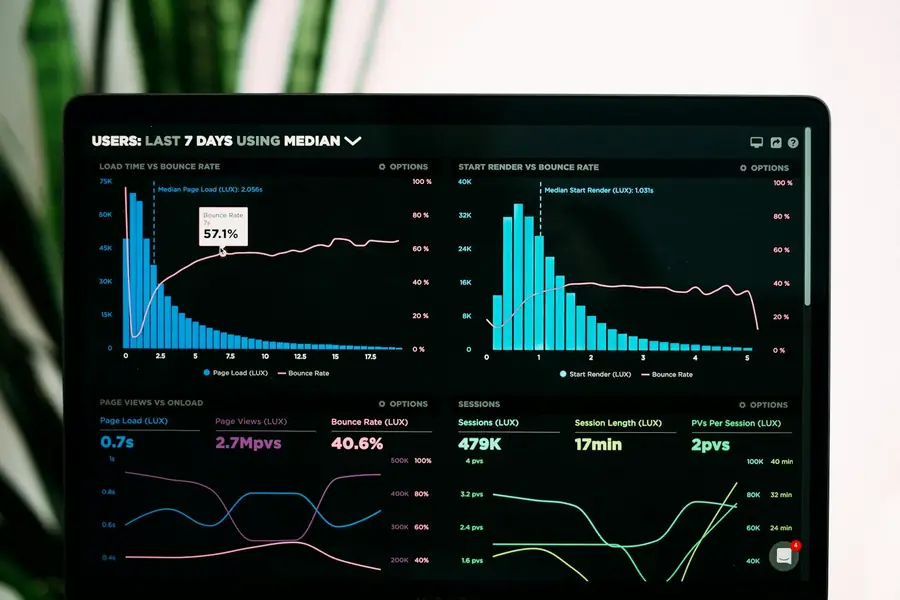
DORA-style delivery metrics and developer surveys to steer the platform roadmap.
What platform engineering is — and what it is not
Platform engineering is the practice of building an internal developer platform (IDP): a curated set of self-service tools, templates and guardrails that product teams use to create, deploy and run software without each team re-solving infrastructure. It is not “buy a portal and call it done”, and it is not a central ops team that takes tickets. A good platform is treated as a product, with developers as its customers.
When you need a platform
- Several teams each maintain their own pipelines, Terraform and Kubernetes manifests — all slightly different.
- New services take days or weeks to get a repository, pipeline, environments and monitoring.
- Security and compliance controls are applied inconsistently, team by team.
- New engineers take a long time to ship their first change.
- Nobody can quickly answer “who owns this service?”
If you have one or two teams, you probably need solid DevOps automation first; a platform pays off once that work is being repeated across teams.
The building blocks of an internal developer platform
| Layer | What it provides | Typical tools |
|---|---|---|
| Developer portal | Service catalogue, ownership, docs, scorecards | Backstage, Port |
| Golden-path templates | New service with repo, pipeline, observability and security pre-wired | Backstage scaffolder, cookiecutter |
| Delivery | Standard CI/CD and GitOps deployment | GitHub Actions, GitLab CI, Argo CD, Flux |
| Infrastructure | Self-service databases, queues, buckets via approved modules | Terraform modules, Crossplane |
| Runtime | Shared, hardened clusters or serverless platform | EKS, AKS, GKE, Cloud Run |
| Guardrails | Policy as code, secrets, identity | OPA/Gatekeeper, Kyverno, Vault, cloud KMS |
| Observability | Default dashboards, logs, traces and alerts per service | OpenTelemetry, Prometheus, Grafana |
Our approach
1. Discover developer pain
We interview teams and map the path from idea to production, measuring where time is lost: waiting for environments, fighting pipelines, chasing approvals.
2. Define the thinnest viable platform
We pick the one or two golden paths that remove the most friction — often “create a new service” and “deploy to production” — rather than building everything at once.
3. Build, adopt, measure
We build the paths with a pilot team, improve them from real feedback, then roll out. We track adoption and delivery metrics such as lead time for changes, deployment frequency and onboarding time (the DORA and SPACE frameworks are useful here) so the platform’s value is visible.
4. Hand over a product
The platform comes with a backlog, documentation and ownership model so your platform team can run it as a product.
Common pitfalls
- Building a portal before the underlying automation exists.
- Mandating the platform instead of making it the easiest path.
- Over-abstracting Kubernetes so developers cannot debug their own services.
- No owner or roadmap after the initial build.
Related services and reading
Platforms sit on top of solid cloud infrastructure and feed SRE and observability practices. Our guides on scalable CI/CD pipelines and controlling Kubernetes cost cover two of the most common platform building blocks.
How We Build Your Platform
Listen
Interview developers, map their journeys and rank the biggest sources of friction.
Pave
Ship a thin first golden path for the most common service type, end to end.
Expand
Add self-service capabilities, guardrails and the portal based on real usage.
Hand Over
Set up platform ownership, roadmap and metrics so your team keeps it evolving.
Frequently Asked Questions
An IDP is the self-service layer developers use to create services, provision infrastructure, deploy and find documentation. It standardises the paved road to production so teams move faster with security and consistency built in.
DevOps is the culture and set of practices for fast, reliable delivery. Platform engineering packages those practices into a reusable internal product, so every team benefits without rebuilding pipelines, infrastructure and guardrails themselves.
Yes, Backstage is often a good fit for the developer portal layer, and we also work with alternatives such as Port. The portal is only one layer; most of the value comes from the golden-path automation behind it.
A first golden path with a pilot team can usually be delivered in a matter of weeks. A broader platform evolves over months as more paths are added and adoption grows. We plan in increments so value arrives early.
Discovery is a short fixed-price engagement. Build phases are scoped per increment, either fixed-price or as a dedicated team on a monthly basis, depending on how well defined the scope is.
Book a free consultation. We start by understanding how your developers ship today and where the biggest friction is.
Ready to get started with Platform Engineering?
Book a free consultation — we'll map a secure, practical path forward.