










 Compliance-first delivery
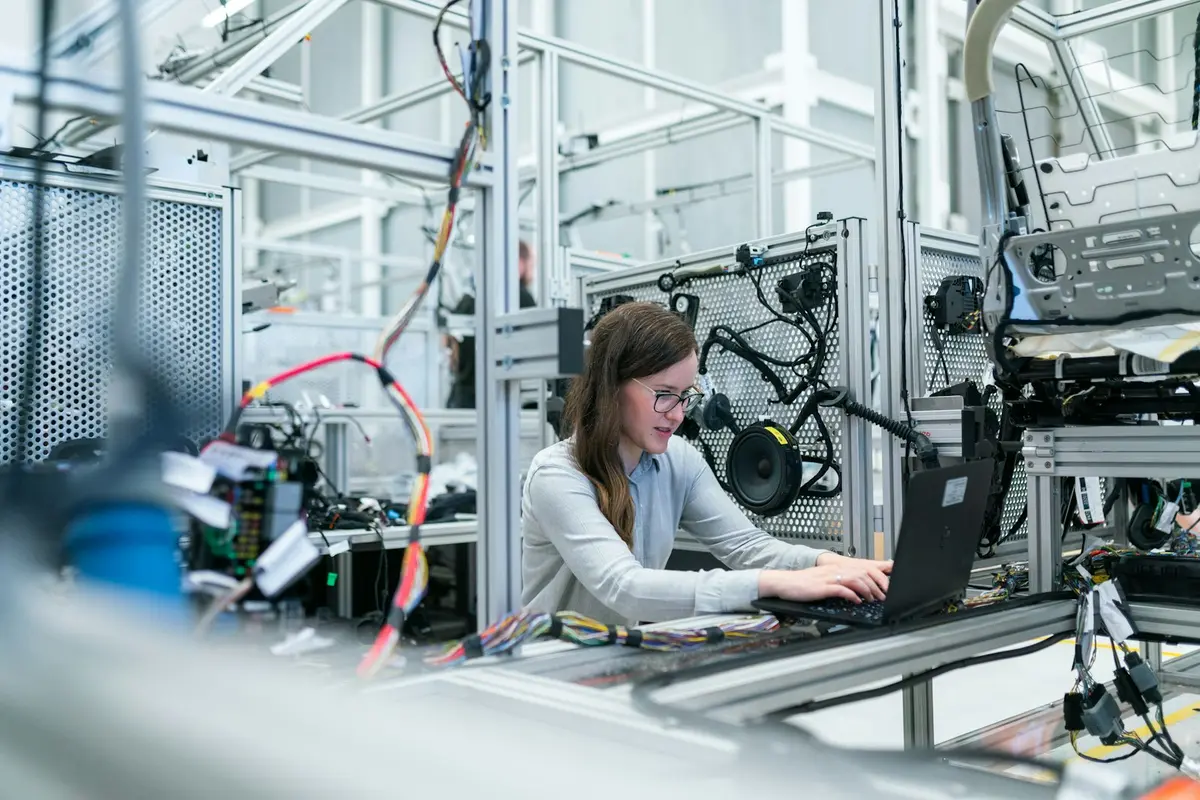
Most factories have plenty of data. It just isn’t in one place
Machines record cycle times and alarms, quality inspectors fill in paper sheets, planners live in the ERP and the maintenance team keeps its own spreadsheet. When a buyer asks why a shipment was late or a defect slipped through, it takes days to piece the story together. Meanwhile machines that cannot be patched are being connected to networks that were never designed for them.
We connect the shop floor to the business with ERP and MES integration, collect machine data through edge-to-cloud pipelines, build quality and maintenance apps, add production dashboards and predictive models, and protect operational technology with segmentation and secure remote access. We also build and run our own Fabric Inspection Software for textile mills.
What we hear on factory visits
Paper, silos and unpatchable machines come up in almost every conversation.
“Quality data lives on paper”
Inspection sheets are typed up days later, if at all, so defects are found after shipment.
“We can’t see OEE without walking the floor”
Machine data exists but never reaches a dashboard managers actually use.
“Our ERP doesn’t know what the floor is doing”
Production confirmations, scrap and downtime are entered manually at the end of the shift.
“Machines break without warning”
Maintenance is reactive, spares are guessed and downtime is expensive.
“Vendors want remote access to our PLCs”
Remote support is convenient, but it opens holes into networks with unpatchable machines.
“Buyers ask for traceability and compliance data”
Export customers want batch traceability, test reports and product data on demand.
Manufacturing solutions from the machine to the buyer
Start where the data gap costs you the most.
Machine data & OEE dashboards
The challenge
Machines and PLCs produce data that never leaves the shop floor.
Our approach
We collect data at the edge through OPC UA, MQTT or Modbus gateways, buffer it for unreliable links, send it to a cloud or on-premises time-series store and build OEE, downtime and alarm dashboards.
What you get
- Edge gateways and protocol adapters
- Buffered, secure data pipeline
- OEE, downtime and alarm dashboards
- Shift and line performance reports
Digital quality inspection
The challenge
Paper inspection sheets, late defect discovery and slow, inconsistent buyer reports.
Our approach
We build tablet-based inspection apps with tap or voice entry, photos and standard methods (such as the 4-point system for fabric), then generate buyer-ready reports instantly. Our own Fabric Inspection Software does exactly this for textiles.
What you get
- Tablet inspection app
- Photo evidence and standard scoring
- Instant buyer-ready reports
- Defect trends by line, supplier and shift
ERP, MES & traceability integration
The challenge
Production, scrap and quality data are rekeyed into the ERP, and batch traceability is assembled by hand.
Our approach
We integrate shop-floor systems with the ERP through APIs and middleware, automate production confirmations and build batch and serial traceability from raw material to shipment.
What you get
- ERP–MES integration
- Automatic production confirmations
- Batch and serial traceability
- Customer EDI and portal feeds
Predictive maintenance
The challenge
Unexpected breakdowns, reactive maintenance and guesswork about spares.
Our approach
Starting from your sensor and maintenance history, we build condition-monitoring rules first and machine-learning models where the data supports them, connected to work orders.
What you get
- Condition-monitoring rules and alerts
- Failure-prediction models where data allows
- Work-order integration
- Spares and downtime analytics
OT network security & remote access
The challenge
Flat networks, unpatchable machines and vendors with always-on remote access.
Our approach
We assess OT assets and network paths, segment IT from OT using zones and conduits (IEC 62443 concepts), replace ad-hoc remote tools with brokered, logged and time-limited access, and monitor for anomalies.
What you get
- OT asset and network assessment
- IT/OT segmentation design
- Brokered, logged vendor remote access
- OT-aware monitoring
Rules reaching the factory floor
Cybersecurity and product rules are increasingly aimed at manufacturers and the products they make.
IEC 62443
The international standard series for industrial automation and control-system security: zones and conduits, security levels and secure development for suppliers.
Cyber Resilience Act
In force since December 2024. Manufacturers of products with digital elements must report actively exploited vulnerabilities from 11 September 2026, and full security-by-design obligations apply from December 2027.
Machinery Regulation (EU) 2023/1230
Applies from 20 January 2027, replacing the Machinery Directive and adding requirements on safety-related software and protection against corruption, including cyber attacks.
NIS2 Directive
Manufacturers in sectors such as medical devices, electronics, machinery and vehicles can be “important entities”, with risk-management and incident-reporting duties.
CMMC 2.0
Defence supply-chain manufacturers handling controlled unclassified information need NIST SP 800-171 controls as CMMC is phased into contracts from November 2025.
Ecodesign & Digital Product Passport
The Ecodesign for Sustainable Products Regulation (in force July 2024) introduces digital product passports, with textiles among the first priority product groups. Product and traceability data need to be ready.
Status as of October 2026. Regulations change; we help you design, implement and evidence technical controls. Legal interpretation belongs with your counsel, and certifications or audit opinions are issued by independent bodies, not by us.
Protocols and systems we work with
- OPC UA
- MQTT
- Modbus TCP
- Siemens & Allen-Bradley PLC data
- Historians
- InfluxDB / TimescaleDB
- SAP
- Oracle
- Tally
- Odoo
- Android tablets
- Grafana
Manufacturing products we build and run
Real software in real factories. It is why our shop-floor advice is practical.

Fabric Inspection Software
4-point fabric inspection on a tablet, buyer-ready reports 4-point fabric inspection on a tablet by tap or voice, with buyer-ready reports in minutes, for mills, knitters and exporters. Visit fabricinspectionsoftware.com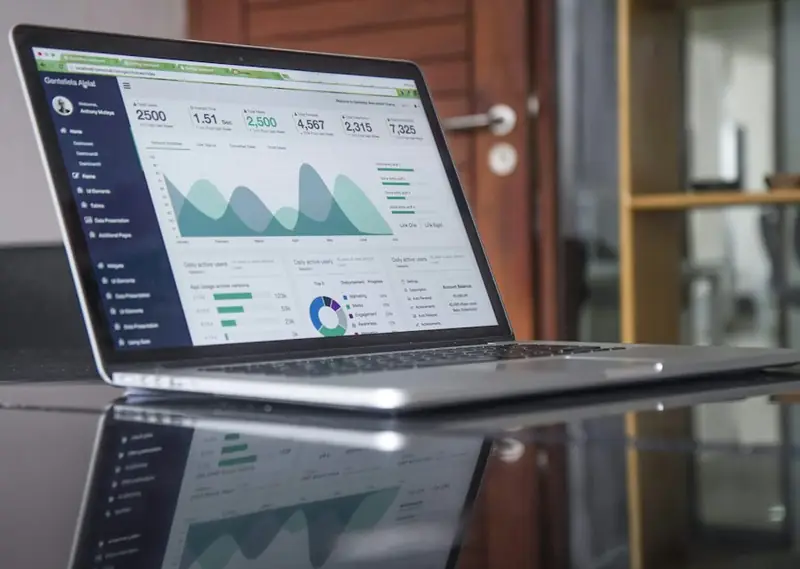

CloudMonitor
See your entire cloud, clearly — multi-cloud cost, security & inventory Cost, inventory and security posture for the cloud side of your IoT and analytics platforms. Visit cloud-monitor.radiatus.com

SemperWise
AI-first cybersecurity: VAPT, pentesting & compliance on SemperWise One™ Penetration testing and security assessments, including for connected products and their cloud backends. Visit semperwise.comA typical first engagement: the shop-floor data pilot
Four to six weeks, one line or one process, to prove value before rolling out further.
Walk the floor
On-site or remote walkthrough of one line: machines, controllers, paper forms and existing systems.
Pick the metric
Agree one outcome to improve (OEE, first-pass yield, inspection time or downtime) and how to measure it.
Connect & build
Edge data collection or a digital inspection app for that line, plus a dashboard for supervisors.
Review & scale plan
Results against the baseline, lessons learned and a costed plan for other lines and plants.
Guides and terms for manufacturing teams
Guides
Questions manufacturing teams ask us
Rarely. Most machines can be connected through their existing controllers using OPC UA, Modbus or vendor protocols, or with retrofit sensors where there is no digital interface.
Yes. We can run the data platform on-premises, in the cloud or in a hybrid model, which is common when connectivity is limited or customers restrict data location.
It can be, with the right architecture: segmentation between IT and OT, outbound-only connections from edge gateways, brokered vendor access and monitoring. We assess your current exposure before connecting anything new.
Yes. Our own Fabric Inspection Software is built for mills, knitters and exporters, and we help with buyer reporting, traceability and the product data that export customers increasingly request.
A single-line pilot usually shows measurable results within four to six weeks, which gives you real numbers before deciding on a wider rollout.
Ready to get one line’s data off paper and into decisions?
Tell us about the line, the machines and the metric you care about. We will propose a pilot.